Conventional Home Loans With as Little as 3% Down
Buy, build or renovate with a conventional loan. Compare conventional rates from 100+ lenders and get the strongest offer your file qualifies for.
- Buy, Build or Renovate
- PMI You Can Cancel at 20% Equity
- 1 Day Pre Approval

30+ years lending · 500+ reviews · Licensed in 26 states
CONVENTIONAL LOANAs little as 3% downBuy · Build · Renovate
Austin Capital Mortgage
Your pre-approval checklist is ready
Your pre-approval checklist is ready


30+Years lending, since 1996
500+Reviews
26States licensed
100+Lenders compared
Choose the Conventional Loan That Fits Your Plans
Six conventional options cover buying, renovating and building. Compare the cards to see what each one offers.
Is a Conventional Loan Right
for You?
A conventional loan can fit many situations. Open each one to see if it sounds like you.
Not sure? A loan officer can compare conventional with your other options in one call.
Get a Rate QuoteYou're buying your first home
Put down as little as 3%, about $9,000 on a $300,000 home, with HomeReady or Home Possible.
Both programs are for primary homes and use household income limits.
We’ll show you which program fits your income and your county.
You want mortgage insurance that cancels
With less than 20% down, you pay private mortgage insurance (PMI).
You can ask to cancel it at 80% loan-to-value, and it ends automatically at 78% when you stay current on payments.
We’ll show you the full payment with PMI before you commit.
You're buying a second home or an investment property
Single-unit second homes start at 10% down and investment homes at 15% down.
Lenders add their own rules for reserves and rental income.
We’ll check your scenario against lenders who finance second homes and investment property.
Your price is above the standard loan limit
High-balance conventional loans reach $1,249,125 in high-cost counties.
Above your county limit, a jumbo loan is the next step.
We’ll check your county limit and show you both options.
You're buying a home that needs work
HomeStyle and CHOICERenovation finance the purchase and the repairs in one loan.
Repairs can include structural work, a pool and foundation repairs.
We’ll help you match your project to the right renovation loan.
You're building a home
A construction-to-permanent loan closes once and locks your rate for the permanent loan.
You make interest-only payments while you build and do not re-qualify when construction ends.
We’ll walk you through the draw schedule for your build.
Conventional Loan Requirements
in 2026
Each lender can add its own rules on top of Fannie Mae and Freddie Mac guidelines.
Credit approvals look at your whole profile
Fannie Mae’s automated underwriting no longer sets a minimum credit score on loan files created on or after November 16, 2025.
Each lender adds its own minimum, and many still require 620.
We’ll check your score and find a lender that fits your file.
As little as 3% down
HomeReady and Home Possible start at 3% down. A standard primary home starts at 5% down.
Second homes start at 10% down and investment homes at 15% down.
We’ll show you the down payment for each option on your price.
Debt-to-income up to 50%
Automated approval can allow a total debt-to-income ratio up to 50% when the rest of your file is strong.
We’ll run your numbers so you know your budget before you shop.
Pay stubs, W-2s and tax returns verify your income
W-2 earners need recent pay stubs and two years of W-2s.
Self-employed borrowers should plan on two years of tax returns.
Income that does not fit these documents can still qualify through our bank statement program.
Primary homes, second homes and investment properties
Eligible properties include single-family homes, townhomes, PUDs, warrantable condos and 2 to 4 unit homes.
Occupancy sets your down payment, and HomeReady and Home Possible are for primary homes.
We’ll check your property against the program before you make an offer.
Loan limits from $832,750
The 2026 baseline limit is $832,750 for a one-unit home and reaches $1,249,125 in the highest-cost counties.
We’ll check your county’s limit and tell you if high-balance applies.
Requirements may vary by lender and loan scenario. Meeting the minimums does not guarantee approval.
Verified employment · Stable income2+ years of Employment
Income VerificationPay stubs · W-2 · Tax returns

Get Your Personalized Quote in 2 Minutes
Fill our 2 min form to see live rates from lenders based on your scenario. One application, 100+ lenders.
Get Free Rate Quote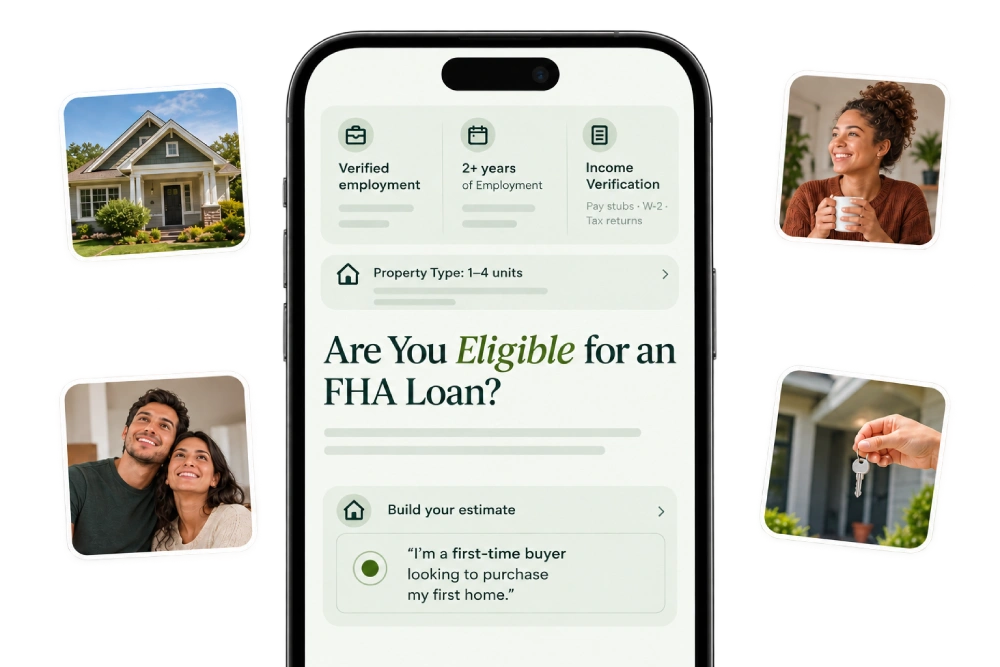
What Homeowners Say About Working With ACM
Your Conventional Loan, From Quote to Closing
Most purchases close in 10 to 21 days from contract. Here is what happens at each step.
01
01
Get Your Free Rate Quote
Fill our 2 min form and get quotes from 100+ lenders. No obligation.
02
02
Get Pre-Approved in One Day
Submit your documents online and get approved in as little as one day.
03
03
Make Your Offer
Shop with a pre-approval letter so sellers know your financing has been reviewed.
04
04Lock Your Rate
Lock your rate when you are ready to protect it while your file moves forward.
05
05
Appraisal and Underwriting
An appraiser confirms the home’s value and our in-house underwriters review your file. Your loan officer sends updates every 48 to 72 hours.
06
06
Close and Move In
Sign your closing documents and get your keys.
Compare Your Conventional Loan Options
Each option fits a different plan. We'll help you pick the one that fits your credit, cash and project.
| Feature | Conforming and High-Balance | HomeReady / Home Possible | HomeStyle / CHOICERenovation | Construction-to-Permanent |
|---|---|---|---|---|
| Often a good fit for | Buyers with strong credit and a standard purchase | Buyers with limited savings and income up to 80% of area median | Buyers of a home that needs repairs | Buyers building a new home |
| Minimum down payment | 5% on a primary home; 10% second home; 15% investment | 3% on a primary home | 3% to 5% on a primary home; 10% second home; 15% investment | 10% (up to 90% LTV) |
| Credit score | Set by your lender; many require 620+ | Set by your lender | Per automated underwriting findings; manual underwriting is not eligible | 680 for 90% LTV |
| Loan amount | Up to $832,750; up to $1,249,125 in high-cost counties | Same conforming limits | Per FHFA limits; minimum loan $40,000 | Based on contract price and construction draws |
| Properties and occupancy | 1 to 4 unit primary homes; 1 unit second homes and investment | Primary home only; 1 to 4 units | Primary home; 1 unit second home; single-family investment | Site-built homes and double-wide factory-built homes (Fannie Mae); primary and second homes |
| Standout feature | PMI cancels at 80% loan-to-value | Lowest down payment of any conventional loan | 15 months (HomeStyle) or 450 days (CHOICERenovation) to draw funds | One closing, one appraisal, rate locked for the permanent loan |
Programs, terms and availability vary by lender and loan scenario. Meeting the minimums does not guarantee approval.
Compare with FHA loans and jumbo loans, or read our FHA vs. conventional and conventional vs. VA guides.
Talk to a Mortgage Expert About Your Conventional Loan
Get answers on your credit, down payment and budget from a licensed loan officer before you apply.
Talk to a Mortgage ExpertWhy Shop Your Conventional Loan With ACM
Every lender prices conventional loans differently. Comparing many lenders changes what you pay.
01 Rates

We Find Your Best Rate
Compare conventional rates from 100+ lenders and get the strongest offer your file qualifies for.
02 Pre-approval

Get Pre-Approved in One Day
Know what you can afford in one day, so you can make an offer with confidence.
03 Underwriting

In-House Underwriting
Our own underwriters review your file, so it moves without hand-offs to outside teams.
04 Speed

Close in 10 to 21 Days
Most purchases close in 10 to 21 days from contract, with a closing date that fits your move.
Conventional Loans: Your Questions Answered
Get clear answers on conventional loan requirements, down payments, PMI and your options.
What is a conventional loan?
A conventional loan is a mortgage that no government agency insures. Most follow Fannie Mae or Freddie Mac guidelines and fit buyers with steady income and solid credit.
You can use one to buy, renovate or build a primary home, a second home or an investment property.
What are the requirements for a conventional loan?
Lenders review four things: your credit, your income, your debts and your down payment.
Fannie Mae’s automated underwriting no longer sets a minimum credit score on files created on or after November 16, 2025. Each lender sets its own minimum, and many still require 620.
Automated approval can allow a debt-to-income ratio up to 50% when the rest of your file is strong.
W-2 earners provide recent pay stubs and two years of W-2s. Self-employed borrowers provide two years of tax returns.
How much down payment do you need for a conventional loan?
HomeReady and Home Possible start at 3% down on a primary home.
A standard primary home starts at 5% down. Single-unit second homes start at 10% down and investment homes at 15% down.
With 20% down, you skip private mortgage insurance.
How does PMI work, and how do you cancel it?
With less than 20% down, you pay private mortgage insurance (PMI) in your monthly payment.
You can ask to cancel it when your balance reaches 80% of the home’s original value. It ends automatically at 78% when your payments are current.
Higher credit scores can lower your PMI cost. We’ll show you the full payment with PMI before you commit.
Is a conventional loan better than an FHA loan?
FHA starts at 3.5% down with a 580+ credit score, and its mortgage insurance lasts the life of the loan with less than 10% down.
Conventional starts at 3% down with HomeReady or Home Possible, and PMI cancels as your equity grows.
We’ll price both on your file and show you the monthly payment side by side. See our FHA loan page or the FHA vs. conventional guide.
What is the conforming loan limit for 2026?
The 2026 baseline limit is $832,750 for a one-unit home. In high-cost counties it reaches $1,249,125.
Your county sets the limit. Loans above it are jumbo loans, and we’ll check your county before you make an offer.
Can you get a conventional loan with 3% down?
Yes. HomeReady and Home Possible allow 3% down on a primary home when your household income is at or below 80% of the area median.
Both programs welcome first-time and repeat buyers, and homebuyer education may apply.
Can you use a conventional loan for a second home or an investment property?
Yes. Single-unit second homes start at 10% down and single-unit investment homes at 15% down.
Lenders add rules for reserves and rental income, so we match your scenario to a lender who finances these properties.
Can you renovate or build with a conventional loan?
Yes. HomeStyle Renovation and CHOICERenovation finance your purchase and repairs in one loan. You get 15 months (HomeStyle) or 450 days (CHOICERenovation) to draw funds.
A construction-to-permanent loan closes once and locks your rate for the permanent loan. You pay interest only while you build.
Next step
Get Your Free Conventional Rate Quote
- Compare conventional rates from 100+ lenders
- Takes about 2 minutes
- No obligation
Meet Your Conventional Loan Officers
Every ACM borrower works with one licensed loan officer from application to closing.

Jett Middleton
Loan Officer
Jett Middleton
NMLS: 2736777Jett focuses on first-time homebuyers and down payment assistance programs, along with DSCR loans for investors.
View Profile
Lance Kotal
Loan Originator
Lance Kotal
NMLS: 308707Lance has been a loan officer in Austin since 2001. A UT Austin economics graduate who helped his father build houses, he brings hands-on knowledge of homes to the financing conversation.
View Profile
Clint Brinkoeter
Loan Officer
Clint Brinkoeter
NMLS: 2592637Clint has more than a decade of experience in mortgage origination. A Texas State finance graduate, he's known for his market knowledge and close community ties.
View Profile
Adrienne Sanchez
Loan Officer
Adrienne Sanchez
NMLS: 1213046Adrienne entered the mortgage industry in 1994, led operations at a mortgage company and joined ACM in 2009. She brings three decades of lending experience to every file.
View Profile
Tom Oltmann
Loan Officer
Tom Oltmann
NMLS: 308768Tom has originated loans at ACM since 2008, after more than a decade managing retail stores for AT&T. He works with first-time buyers and investors and keeps clients informed at each step.
View Profile
Charlie Cooper
President
Charlie Cooper
NMLS: 326203Charlie leads Austin Capital Mortgage and brings a long-term view of the lending business to every file. A University of Houston finance graduate, he's known for getting to the right answer quickly.
View ProfileGet Your Free Conventional Rate Quote
Compare conventional rates from 100+ lenders in 2 minutes, or talk with a loan officer today.
Conventional loan questions? We’ve got answers.
Clear answers on credit, down payments, PMI, loan limits and what to expect before closing.
More questions? See our Mortgage FAQs.
Still have a question?
Speak with a local mortgage expert and get answers tailored to your situation.
What are the conventional loan requirements?
You need a credit score your lender accepts, steady income with pay stubs and W-2s or tax returns, and a down payment of 3% to 15% depending on the program and how you will use the home. See the requirements above for each detail.
We’ll check your file and tell you where you stand.
How do I qualify for a conventional loan?
Start with a free rate quote or a call. Your loan officer reviews your credit, income, savings and debts, then matches you to a lender whose guidelines fit your file.
What credit score do I need for a conventional loan?
Fannie Mae’s automated underwriting no longer sets a minimum score on files created on or after November 16, 2025. Each lender sets its own minimum, and many require 620.
We’ll find a lender that fits your score.
How much down payment do I need for a conventional loan?
HomeReady and Home Possible start at 3%. A standard primary home starts at 5%, a second home at 10% and an investment property at 15%.
Can I get a conventional loan with 3% down?
Yes. HomeReady and Home Possible (sometimes called a conventional 97 loan) allow 3% down on a primary home when your household income is at or below 80% of the area median.
We’ll check your income against your county’s limit.
Can a first-time buyer get a conventional loan?
Yes. Many first-time buyers use HomeReady or Home Possible, and homebuyer education may apply. Repeat buyers can use these programs too.
What are the 2026 conventional loan limits?
For a one-unit home, the 2026 limit is $832,750 in most counties and up to $1,249,125 in the highest-cost areas.
Your loan officer confirms the limit for your county.
Can I use a conventional loan for a second home or an investment property?
Yes. Single-unit second homes start at 10% down and single-unit investment homes at 15% down. Lenders add rules for reserves and rental income.
We’ll show you which lenders fit your scenario.
Can I renovate with a conventional loan?
Yes. HomeStyle Renovation and CHOICERenovation finance your purchase and repairs in one loan. HomeStyle gives you 15 months to draw funds, and CHOICERenovation gives you 450 days.
A consultant is required for repairs above $75,000 or any structural work.
Can I build a home with a conventional loan?
Yes. A construction-to-permanent loan closes once, locks your rate for the permanent loan and lets you pay interest only while you build. Construction terms run 120, 180, 240 or 360 days.
How do I get pre-approved for a conventional loan?
Start with a free rate quote online, submit your documents securely and work with your loan officer by phone or text. Pre-approval includes a credit check and income verification, so it reflects what you can borrow.
Can I compare conventional lenders through ACM?
Yes. We compare conventional rates from 100+ lenders on one application and bring you the strongest offer your file qualifies for.
Keep learning about conventional loans.
Guides comparing conventional loans with FHA, VA and USDA, plus what first-time buyers need to qualify.